
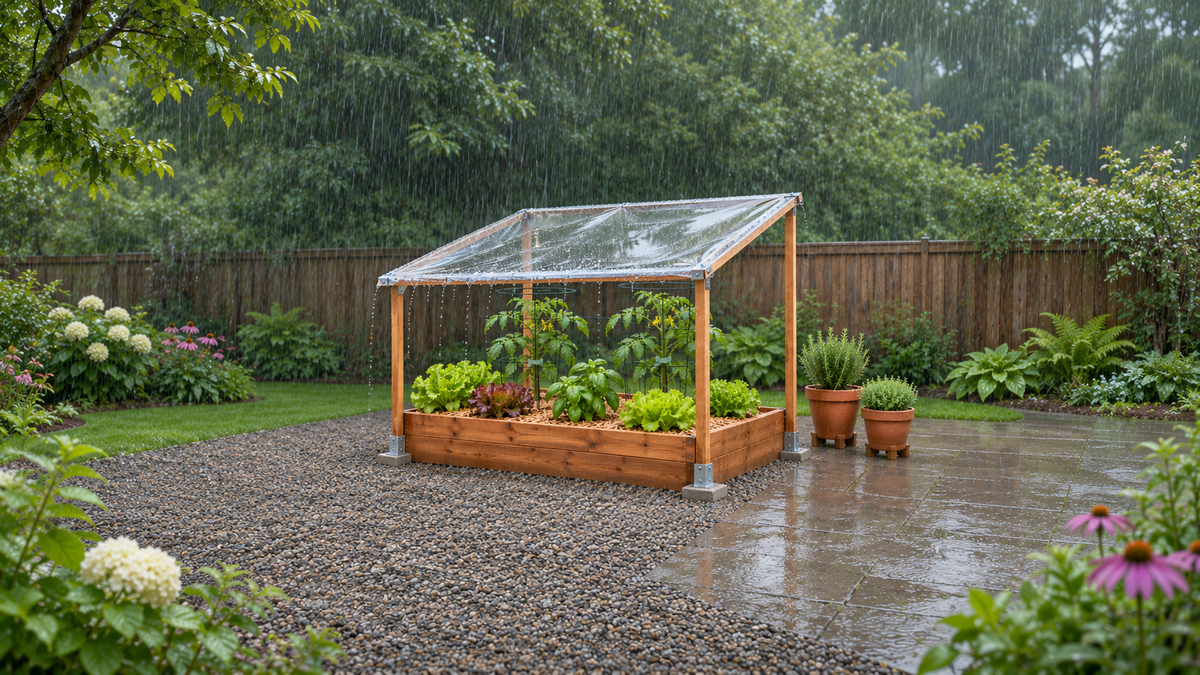
Rain helps keep a garden growing, but prolonged downpours can leave soil waterlogged, weigh down branches, and damage tender plants. Protecting outdoor plants from heavy rain starts with drainage, sturdy supports, and temporary shelter that allows air to circulate.
Use this guide to prepare vegetable beds, container gardens, and flowering ornamentals before a storm, then assess what your plants need once the weather clears.
How Heavy Rain Can Affect Your Garden
Not every rainstorm calls for intervention. Established plants in well-drained soil often handle ordinary rainfall well. Problems are more likely when rain falls faster than the soil can absorb it, containers cannot drain freely, or wind adds stress to already heavy stems.
- Waterlogged roots: Saturated soil limits the air available around roots.
- Broken stems: Wet foliage and fruit add weight, especially on tall or unsupported plants.
- Soil erosion and splash: Runoff can expose roots, move mulch, and splash soil onto leaves.
- Prolonged leaf wetness: Damp, crowded foliage can favor some plant diseases.
Before the Storm: Prepare Your Plants
Check Drainage First
Clear debris from container drainage holes and empty saucers that could trap runoff. Move portable pots away from roof runoff and low spots where water collects. Where practical, place containers on stable pot feet so drainage holes remain unobstructed.
For garden beds, identify where water normally pools and where runoff enters. Avoid directing water toward neighboring property or building foundations. Long-term drainage improvements are best planned before the next storm rather than by digging through a saturated, planted bed.
Support Tall and Heavy Plants
Inspect stakes, cages, and trellises before rain and wind arrive. Secure loose structures and use soft plant ties that support stems without cutting into them. Leave room for growth and natural movement. Fruiting tomatoes, climbing vegetables, and tall flowering ornamentals may need extra attention.
Whenever possible, install supports while plants are young. Driving a large stake beside an established plant can damage roots.
Use Temporary Rain Covers Carefully
A securely anchored cover can help shelter vulnerable plants, but it should sit on a frame rather than rest on foliage. Slope the cover so water drains away instead of collecting overhead. Leave the sides open enough for ventilation.
Clear plastic can trap heat when sunshine returns, so monitor conditions and remove or open temporary covers promptly. Lightweight covers can also act like sails in strong winds. Do not use a structure that cannot be anchored safely, and never go outside during lightning or dangerous winds to adjust it.
Move Small Containers to Shelter
A bright, protected porch or another sheltered location can be useful for movable pots. Keep plants away from concentrated drips beneath roof edges. Return them to a suitable light exposure when conditions improve, and handle heavy containers safely.
Reduce Soil Splash and Surface Damage
A suitable layer of mulch can soften the impact of raindrops and reduce soil splash. Keep mulch away from plant stems and avoid piling it against trunks. Check that it has not blocked drainage paths or washed over small seedlings.
Rain protection is not the same as sealing a plant inside plastic. The goal is to manage excess water while preserving airflow and preventing heat buildup.
After Heavy Rain: Inspect Before You Act
Look for Standing Water
Check containers, saucers, and low areas first. Restore blocked drainage where you can do so without damaging roots. Pause scheduled irrigation until you have checked moisture in the root zone; a dry-looking surface does not necessarily mean the soil below needs water.
Let Saturated Soil Recover
Avoid walking on wet beds or cultivating soil while it is muddy. Working saturated soil can compact it and damage its structure. Wait until conditions are workable before making major repairs or amendments.
Check Supports and Damaged Growth
Reposition loose ties and inspect stems for cracks or breaks. Use clean tools to remove badly broken growth where appropriate for the plant. Avoid forceful shaking or high-powered air aimed at delicate foliage, which may create additional damage.
Inspect for Disease Symptoms
Over the following days, watch for expanding leaf spots, soft decay, wilting despite wet soil, or moldy tissue. These symptoms can have different causes, so identify the problem before choosing a treatment. Keep suspect material separate from healthy harvested produce and clean tools between affected plants.
Should You Apply a Fungicide Before Rain?
A fungicide is not a substitute for drainage, spacing, or airflow, and no single product is suitable for every plant disease. If you are considering a treatment, first identify the crop and the problem you are trying to manage. Follow the product label for permitted uses, application timing, protective equipment, and any harvest restrictions. A local extension service can help with diagnosis and region-specific guidance.
Avoid copying a spray schedule from another crop or assuming that an organic product is appropriate for every garden.
Common Rain-Protection Mistakes
- Wrapping plants tightly in plastic: Trapped humidity and heat can create new problems.
- Letting covers sag: Collected rainwater can overload a cover and collapse it onto plants.
- Continuing irrigation automatically: Check actual soil moisture before watering again.
- Fertilizing without assessing the garden: Rain does not automatically mean every bed needs replacement nutrients.
- Making major repairs during unsafe weather: Prepare early and wait until conditions are safe to inspect damage.
A Simple Rain-Readiness Checklist
- Check the forecast and prepare before severe weather begins.
- Clear container drainage holes and empty water-catching saucers.
- Secure stakes, cages, trellises, and soft ties.
- Anchor any temporary shelter and allow ventilation.
- Move vulnerable portable pots away from runoff.
- After the storm, inspect moisture, supports, and plant health before restarting routine care.
Build a More Rain-Resilient Garden
The best protection comes from a garden designed to handle changing weather. Good drainage, appropriate spacing, secure supports, and regular observation are more useful than a last-minute rescue. Start with the most vulnerable plants, make improvements between storms, and adjust your care to what the soil and plants actually need.