Knowing when to harvest vegetables and culinary herbs starts with knowing which part of the plant you plan to eat. A ripe tomato, a tender lettuce leaf, and a mature onion each have different signs of readiness. Use seed-packet guidance as a starting point, then check size, color, texture, and flavor before picking.
Use Days to Maturity as a Guide, Not a Deadline
The days-to-maturity estimate on a seed packet describes an approximate harvest window. Check whether the count starts at sowing or transplanting. Weather, light, variety, and growing conditions can all shift that window. Begin inspecting your plants before the estimated date rather than waiting for one calendar day.
How to Tell When Common Vegetables Are Ready
Tomatoes
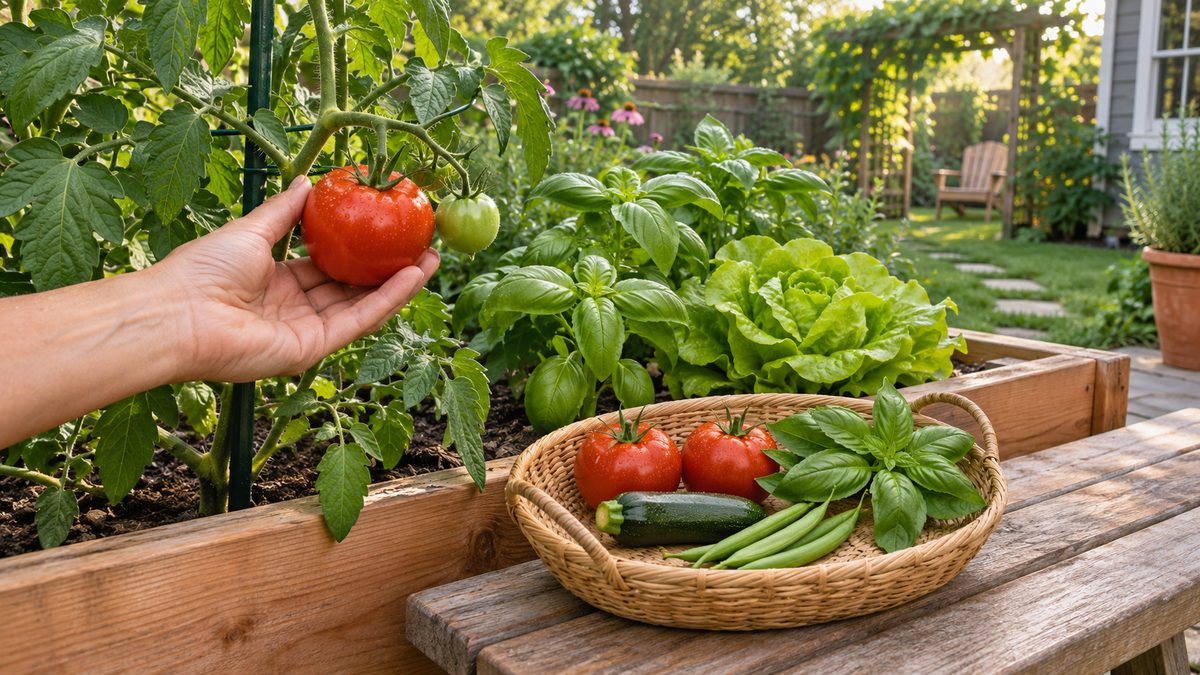
Look for the mature color expected for your variety, which may be red, yellow, orange, purple, or green. Ripe fruit generally yields slightly to gentle pressure. Color alone can be misleading, especially with green-when-ripe varieties, so consider texture and variety descriptions together.
Cucumbers and Zucchini
These crops are usually harvested while young and tender, before seeds become large and hard. Check the expected picking size for your variety. Inspect frequently during productive periods because fruit can grow quickly. Oversized fruit may become tough, seedy, or less appealing.
Lettuce and Leafy Greens
Harvest baby leaves when they reach a useful size, or allow plants to develop larger leaves or heads according to the variety. For cut-and-come-again types, take outer leaves while protecting the central growing point. Watch for bolting, when plants send up a flower stalk; eating quality often declines as this develops.
Beans and Peas
For snap beans and edible-pod peas, pick while pods are tender and before seeds become overly enlarged. Shelling peas are harvested when the pods are filled but still fresh and green. Dry beans are different: they are grown until seeds mature and pods dry. Match your harvest method to the crop’s intended use.
Carrots, Beets, and Radishes
Compare the visible root shoulder with the variety’s expected size. If you are unsure, pull one sample rather than disturbing the whole row. Texture and flavor matter as much as diameter. Radishes in particular can lose quality if left too long.
Peppers
Many peppers can be harvested at a full-sized green stage or left to develop their mature color. The best stage depends on the variety and your preferred flavor. Use clean snips when needed to avoid tearing branches.
When to Harvest Culinary Herbs
For leafy herbs such as basil, mint, and parsley, begin taking small amounts once the plant is established and has enough foliage to keep growing. Avoid stripping a young plant bare. Harvest healthy leaves and tender shoots, and check each herb’s growth habit before cutting.
For basil, cutting just above a pair of leaves can encourage branching. Parsley is commonly harvested by taking outer stems near their base. If you are growing an herb for seeds rather than leaves, the harvest stage will be different. Coriander seeds, for example, are collected after seed development rather than during the leafy cilantro stage.
A Simple Pre-Harvest Checklist
- Confirm the variety: Know the expected mature size, color, and intended use.
- Inspect several plants: Crops rarely mature uniformly across a whole bed.
- Sample a small amount: Taste and texture can help you decide whether to harvest more.
- Use clean tools: Make neat cuts instead of pulling hard enough to damage the plant.
- Prepare a clean container: Keep harvested food off dirty surfaces and avoid crushing delicate leaves.
Choose a Suitable Time to Pick
Cooler parts of the day are often convenient for harvesting delicate greens and herbs because they are less likely to wilt immediately. Avoid unnecessary handling of wet foliage, and move produce out of direct sun promptly. Do not delay picking an otherwise ready crop solely to wait for a particular hour.
Handle Your Harvest Carefully
Separate damaged or decaying produce from sound produce. Brush off loose soil where appropriate, handle tender crops gently, and use crop-specific storage guidance. Not every vegetable belongs in the same storage conditions, and washing before storage is not suitable for every crop. Rinse fresh produce under running water before preparing or eating it.
Common Harvesting Mistakes
- Waiting for everything to ripen together: Pick selectively as individual leaves, pods, or fruits become ready.
- Assuming bigger is better: Tenderness can decline as some vegetables get larger.
- Relying only on a date: Pair maturity estimates with direct observation.
- Taking too much from young herbs: Leave enough healthy growth for recovery.
- Leaving picked produce in the sun: Have a shaded place ready before you begin.
Keep Notes for Your Next Harvest
Record sowing and transplant dates, variety names, the first harvest date, and the size or appearance you preferred. A few notes each season can make future harvest decisions easier. The goal is not one universal sign of ripeness, but learning what readiness looks like for each crop in your garden.